
Have you ever noticed that when a leader becomes overwhelmed, the entire organization seems to feel it?
Meetings become shorter and more reactive. Decisions that once came easily are delayed or second-guessed. Innovation gives way to firefighting. Small problems begin to feel like crises, and before long, the pressure ripples through the entire team. Employees may not know exactly what has changed, but they sense it. The mood shifts. Productivity slips. Culture suffers.
Most organisations respond by looking for better systems, clearer strategies, or stronger execution. But what if the problem isn’t in business at all? What if it begins with the internal state of the person leading it?
That question has become increasingly relevant in recent years. Since 2020, entrepreneurship has surged, fueled by shifting work patterns, digital innovation, and a growing desire for independence. At the same time, conversations around burnout, resilience, mental health, and nervous system regulation have moved from wellness circles into boardrooms, leadership conferences, and executive coaching programs.
At first glance, these trends may seem unrelated. One concerns business growth; the other concerns personal well-being. Yet they may be far more connected than they appear.
For many founders, the greatest obstacle to building a better business may not be a lack of strategy. It may be the condition from which every strategy is created.
According to the UK’s Health and Safety Executive, an estimated 964,000 workers suffered from work-related stress, depression or anxiety in 2024/25, resulting in 22.1 million working days lost across Great Britain.
When Strategy Isn’t the Real Problem
One pattern emerges repeatedly in conversations with experienced entrepreneurs. They rarely seek help because they believe they are emotionally overwhelmed. Instead, they arrive convinced they need to become more productive, scale faster, solve operational problems, or make better strategic decisions.
Yet those working closely with founders often discover something unexpected. The issue isn’t necessarily a lack of intelligence or ambition. It is exhaustion.
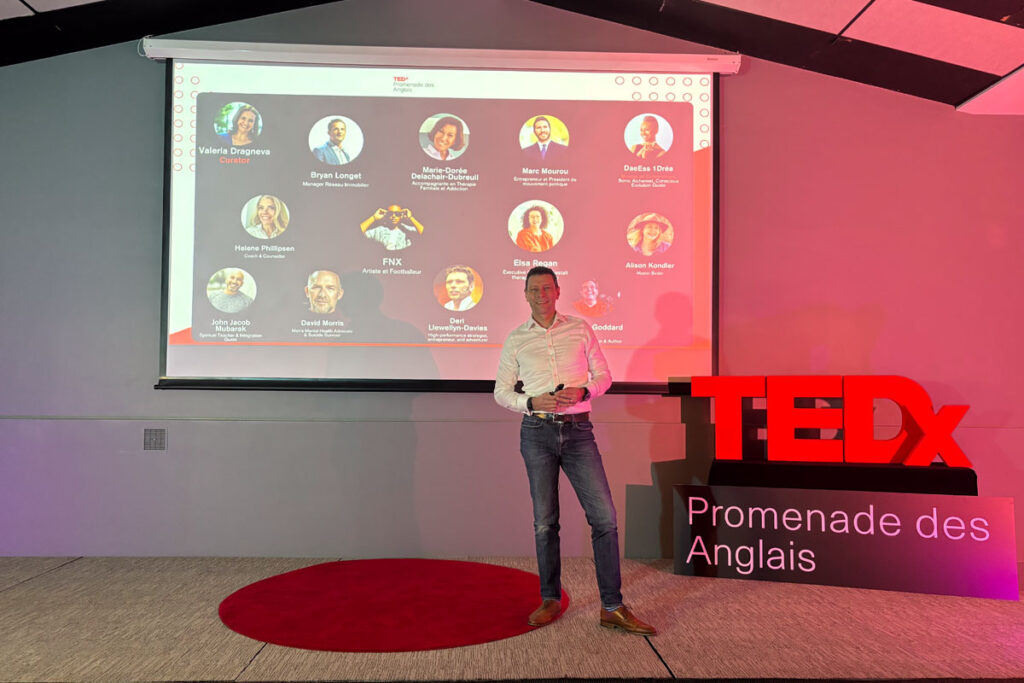
Business strategist and performance expert Deri Llewellyn-Davies has spent more than two decades advising founders and chief executives, and he says he eventually noticed something that changed the direction of his work. Time after time, businesses with sound strategies struggled, while others with similar plans flourished. The difference, he concluded, wasn’t always the strategy itself. It was the state of the person executing it.
His observation challenges one of the most deeply held assumptions in business: that better results come primarily from better tactics. Instead, he argues that the quality of a business often reflects the neurological, psychological, and physiological state of the person leading it. It is a subtle distinction, but one that changes the conversation entirely.
The Business Often Mirrors the Founder
Leadership has always been contagious in one important way: a leader’s emotional state often influences everyone around them.
Research has long shown that emotions spread through teams, influencing morale, collaboration, and performance. A calm leader can steady an uncertain organization. An anxious leader can unintentionally amplify uncertainty throughout it.
Llewellyn-Davies believes the same principle applies to business performance. When founders spend prolonged periods operating in survival mode, constantly reacting, making decisions under pressure, and carrying relentless responsibility, their capacity for strategic thinking begins to narrow. Creativity declines. Relationships become strained. Decision-making becomes more reactive rather than intentional.
Eventually, the business starts reflecting those patterns. Seen through this lens, burnout is no longer simply a personal health issue. It has become a leadership issue. This perspective helps explain why conversations around nervous system regulation have gained momentum among entrepreneurs. Rather than viewing stress as an unavoidable consequence of success, many business leaders are beginning to ask whether managing their internal state may actually be part of their competitive advantage.
A Different Definition of High Performance
For decades, high performance has often been associated with relentless effort: longer hours, greater intensity, and constant availability. But one of the more surprising observations in Llewellyn-Davies’ work is that many of the highest-performing leaders operate very differently.
Rather than pushing harder indefinitely, they become highly intentional about recovery, clarity, and energy management. They understand that sustained performance always depends not on remaining switched on, but on knowing how to enter the right state for the task in front of them.
It is why Llewellyn-Davies frequently encourages clients to stop trying to manage their time and start managing their state. That shift may sound like semantics, but it changes the focus of leadership. Instead of asking, how can I fit more into my day? leaders begin asking, what state do I need to make my best decisions today?
In practice, that may be simpler than many leaders expect. It can mean pausing before an important meeting instead of rushing in from the previous one, taking a brief walk before making a high-stakes decision, blocking uninterrupted time for strategic thinking, or recognizing when fatigue is affecting judgment. Small habits like these may not seem like business strategies, but they can significantly influence the quality of decisions leaders make throughout the day.
The distinction is becoming increasingly important as founders navigate environments where uncertainty is no longer the exception but the norm.
What Changing Your State Looks Like in Practice
Perhaps the clearest illustration of this philosophy comes from the founders themselves.
Llewellyn-Davies recalls working with one entrepreneur who arrived convinced that the solution to his challenges was simply to work harder. Like many business owners, he believed greater effort would eventually produce greater results.
Instead, the work focused on something entirely different. Together, they simplified decision-making, reduced unnecessary complexity, rebuilt daily rhythms, and created space for recovery rather than constant reaction. The company continued to grow. But the most significant change happened before the business metrics improved. The founder no longer felt trapped by the company he had built.
Another client later described the experience in even simpler terms: “I got my life back.” Those stories illustrate something broader than individual success. They suggest that leadership development may sometimes have less to do with acquiring new business techniques and more to do with changing the internal conditions from which those techniques are applied.
Beyond Business Coaching
This is also what distinguishes this approach from more traditional business coaching. Conventional coaching often begins by asking questions about markets, pricing, recruitment, or growth strategy. Those remain important. But Llewellyn-Davies starts somewhere else.
He asks what kind of state the leader is operating from before attempting to improve what the leader is doing. It reflects a growing recognition that organizations do not simply run on systems, processes, and financial models. They also run on the judgment, resilience, and emotional capacity of the people leading them.
That may explain why discussions about nervous system regulation are increasingly finding a place in conversations about entrepreneurship. Far from being separated from business performance, they may be fundamental to it.
Leadership Begins Within
Possibly the most important lesson emerging from this broader movement is that leadership is no longer being viewed solely as an external skill. It is also becoming an internal practice.
The ability to remain calm during uncertainty, recover after periods of intense pressure, think clearly under stress, and lead without becoming consumed by the business itself is increasingly recognized as part of what separates sustainable success from short-term achievement.
For years, entrepreneurs have been encouraged to optimize their calendars, refine their strategies, and improve their execution. Those things still matter. But maybe the next frontier of leadership is not learning to do more. It is learning to lead from a better state.
That idea sits at the heart of Llewellyn-Davies’ work through UltraStates, where neuroscience, psychology, and business strategy intersect. More importantly, it reflects a broader shift taking place across modern leadership: the growing recognition that the strongest organizations are often built by leaders who understand that before they can transform a business, they must first understand the person running it.
In the end, every business strategy begins in the mind of the person. And when leaders learn to regulate themselves before trying to regulate their organizations, they don’t just build better businesses; they become better leaders.
To learn more, visit https://deri.live/

To provide well-rounded coverage and a breadth of insight across various events, we rely on contributions from several staff writers, each bringing their own area of expertise to our publication.