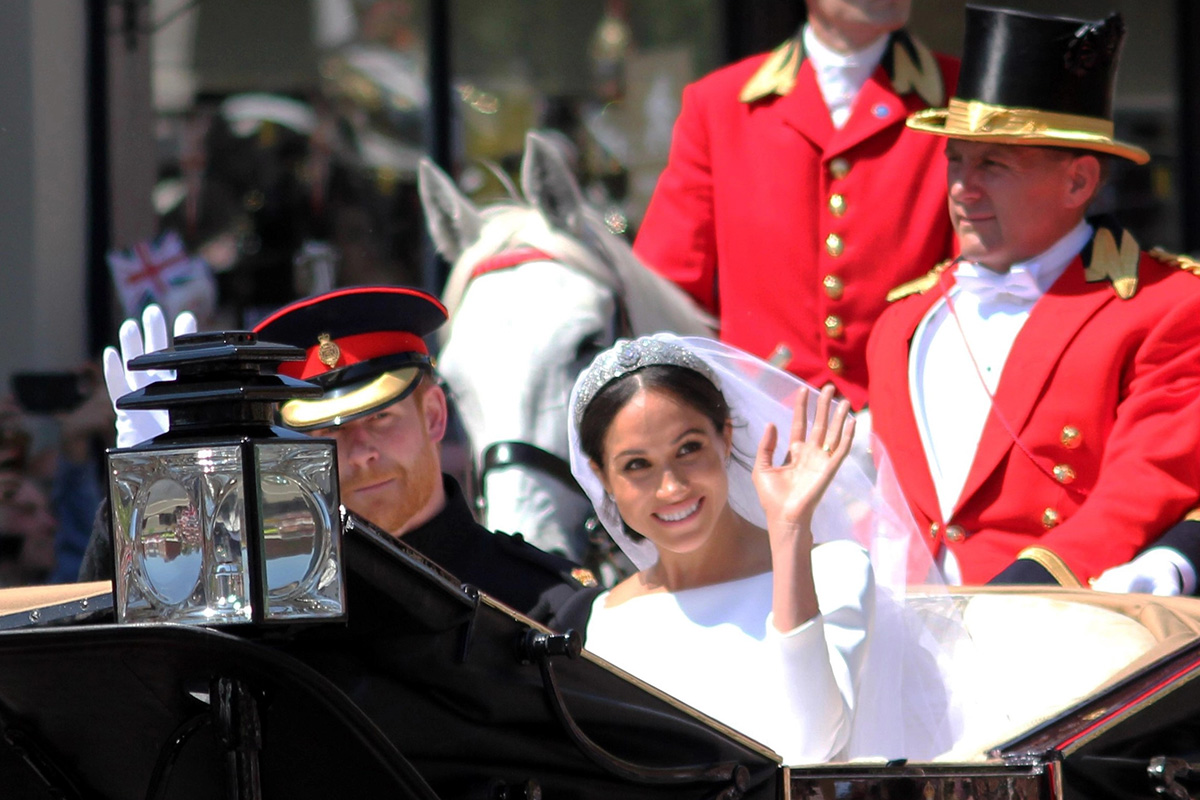
What happens when a global institution built on tradition collides with a modern personality shaped by Hollywood, social advocacy, and cultural change? What happens when the world is asked not just to observe a public figure, but to pick a side? Few living figures have generated as much debate as Meghan Markle, the woman whose name now evokes admiration, ire, fascination, and endless discussion from Los Angeles to London and beyond.
For centuries, the British royal family has operated as a repository of history, pageantry, and quiet reserve. Royals have been symbols first and individuals second, measured, managed, and refined. Then came Markle, someone whose life before royalty was lived under bright lights, social media scrutiny, and the complex realities of race and identity in America. Her story would challenge royal norms and global expectations in ways few anticipated.
Roots That Foreshadowed a Global Life
Markle’s upbringing in Los Angeles set the stage for a life lived between worlds. Born to a Black mother and a White father, she learned early to understand how identity intersects with perception. Her mother, a social worker and yoga instructor, brought an awareness of community engagement and empathy. Her father, a television lighting director, offered a glimpse into the entertainment world.
Markle did not simply aspire to perform; she entered spaces where stories are made. Even as a child, she wrote protest letters against sexist advertising, showing a willingness to use her voice, a trait that would surface again and again in her public life. At Northwestern University, where she studied theatre and international relations, she combined performance with an awareness of global issues, an unusual pairing that would later shape her public identity.
Career in Hollywood and Beyond
Before any royal association, Markle was an actress carving her path in Hollywood. Her résumé was not glamorous at first: small guest roles, auditions, and an unusual sideline as a calligrapher for weddings and events. It was not until her role as Rachel Zane on Suits that she found stability and visibility. The show made her a familiar face in living rooms across America and beyond.
Even then, Markle was not content to be just another actress. She founded The Tig, a lifestyle site that blended recipes, travel, personal essays, and interviews with women she admired. It was an early signal that she saw a public platform as something to shape, not merely occupy.
Through humanitarian work with organisations such as World Vision and UN Women, Meghan projected the image of someone who viewed media visibility as a tool rather than an end in itself. It was a profile that would soon attract a very different spotlight.
A Royal Fairytale and a Reality Tested
When Markle met Prince Harry in 2016, few expected the relationship to become a global phenomenon, least of all Markle herself. Their first date quickly led to a second, and soon Harry invited her on a private trip to Botswana, where privacy and genuine connection reportedly strengthened their bond.
Their engagement announcement in November 2017 was greeted with excitement, and their wedding at St George’s Chapel in 2018 was watched around the world as a multicultural ceremony blending royal tradition with personal expression. Harry was granted the title Duke of Sussex, and Markle became the Duchess of Sussex.
But the fairytale soon took an unexpected turn. Within two years, Markle and Harry announced they would step back from senior royal duties, a decision that sent shockwaves through traditional royal watchers and the global media alike. Many characterised the move as Harry “giving up his title for her”. In reality, the situation was more nuanced. They retained their ducal titles while stepping away from official royal roles and no longer using “His or Her Royal Highness” in formal capacities. It was less a surrender of identity than a reconfiguration of obligations and a renegotiation of what royal life could mean in the twenty first century.
Some praised the move as a courageous bid for autonomy. Others saw it as a rupture in centuries old tradition. The debate quickly became not just about personal choice, but about what the monarchy itself represents in a changing world.
With Love, Meghan: A Show That Divides
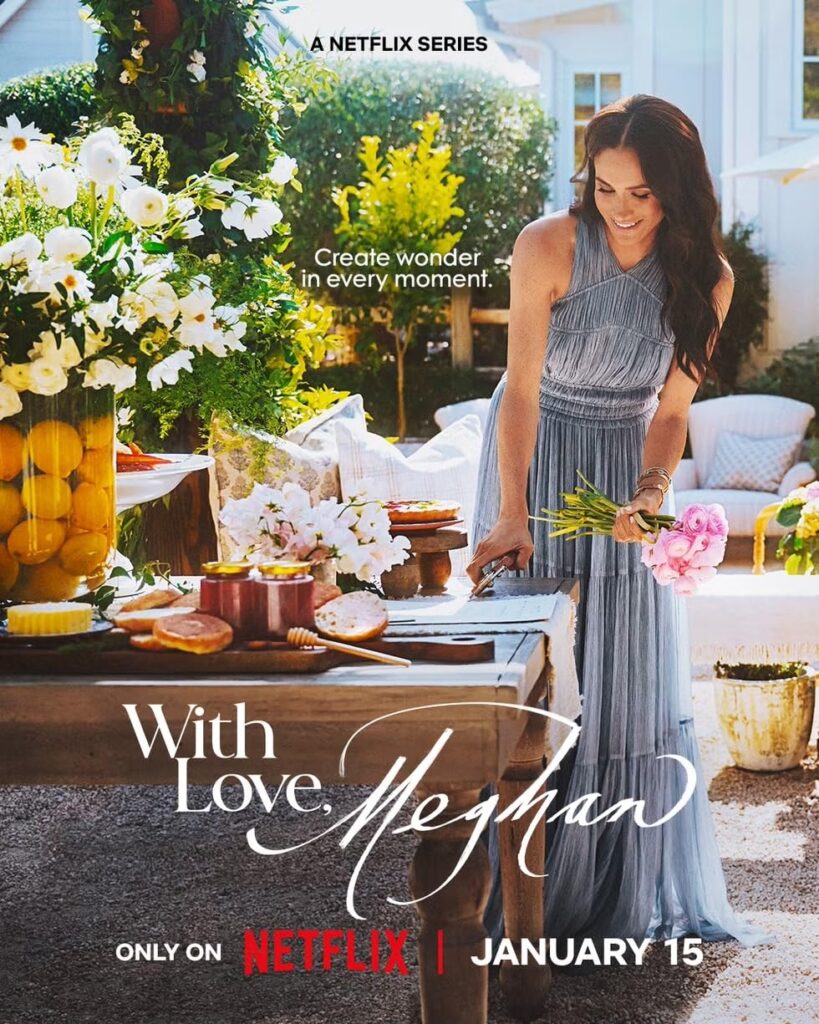
In 2025, Markle launched With Love, Meghan on Netflix, a series that blended cooking, conversation, and curated gatherings. The programme presented an image of sophisticated and thoughtful entertaining.
Audiences and critics, however, were far from unanimous. Some argued that the series felt overly curated and polished, lacking the emotional accessibility many viewers expected. Viewership numbers were modest compared with Netflix’s biggest hits, and the programme slipped quickly from the platform’s top rankings.
Still, a second season was released. Its continuation appeared less about overwhelming success and more about existing production agreements and available content. Season two did not ignite a cultural renaissance either, but it continued the conversation about celebrity lifestyle programming and what audiences expect from public figures with enormous platforms.
The reception reinforced a broader pattern: Markle rarely occupies a quiet space in the media. Whether praised or criticised, she provokes a reaction, a rare accomplishment in an era saturated with content.
A Platform Still in Motion
Markle’s public life does not stand still; it evolves. Her upcoming projects include documentary work with deeper thematic focus, the development of narrative films through her production company, and the expansion of As Ever, her lifestyle brand, which now includes teas, fragrances, wines, and curated goods.
She has also returned to public speaking and women’s empowerment initiatives, spaces where her voice resonates beyond scripted performances and staged appearances.
These ventures suggest a strategic shift: moving beyond the royal narrative towards creative control and entrepreneurship. Whether these efforts succeed critically or commercially, they will continue to shape what might be called the “Meghan Markle effect”.
Why the World Still Talks About Meghan
What explains the intense and often divided global conversation surrounding Meghan Markle?
She resists easy categorisation. She is at once an insider and an outsider, a celebrity and a critic of celebrity culture, a royal and a renegade. In the United States, many view her as a symbol of self determination and modern womanhood. In the United Kingdom, she is often seen through the lens of tradition and national identity, sometimes admired and sometimes contested. Around the world, she represents something slightly different in every cultural context.
Her story intersects with issues that matter: race, media intrusion, personal agency, and the tension between tradition and change. It invites debate rather than consensus.
That is the real Meghan Markle effect. She does not allow the world to look away, and she does not allow it to look the same way twice.

To provide well-rounded coverage and a breadth of insight across various events, we rely on contributions from several staff writers, each bringing their own area of expertise to our publication.